

Image: photo by Pasha Clothier, Back Beach Ngamotu New Plymouth
Celebrating World Water Day
For most of the twentieth century, and most likely since the time of colonisation, Māori have been derided for their belief they were descendant from the stars. Over that period, in the West the dominating belief was that humans descended from apes. It turns out that the Western view needs updating, based on contemporary science. In some ways this has already started.
Phillip Ball is a well known science writer, a science communicator who brings knowledge of science to a general audience. He wrote the book H20: A biography of water first published in 19991 from which most of the information in this blog post is sourced (any incorrect statements are purely my responsibility).
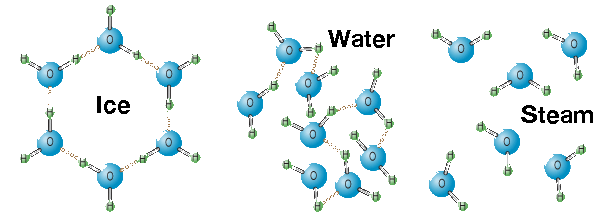
To familiarise ourselves with the science view, molecules are the building blocks of life, and are made up of elements from the Table of Elements. The elements are often referred to as atoms, and hydrogen is the simplest. To make the water molecule, as everyone knows we need two atoms of hydrogen and one of oxygen.
Atoms are made up of sub-atomic energies in their nucleus or centre which carry either a positive, negative or neutral charge. The sub-atomic particles are best thought of as buzzing around the nucleus like bees around a hive – the chance they will be in any particular place is a probability. They are really active things.
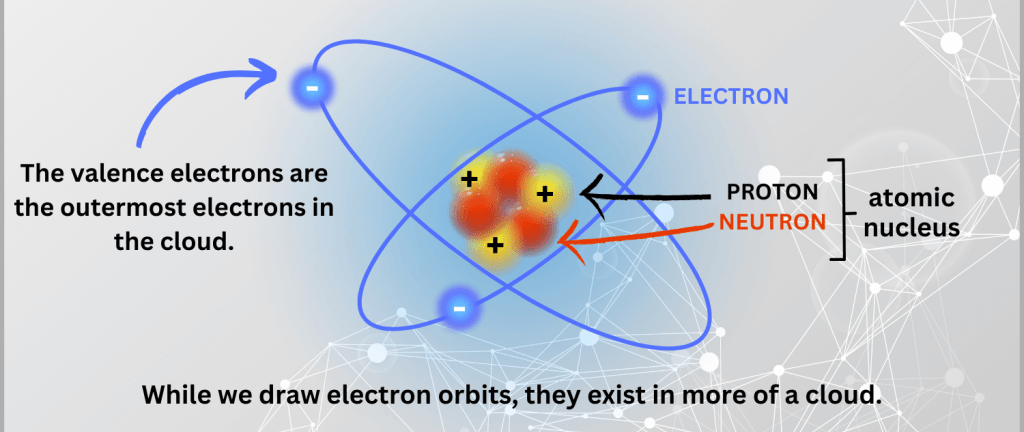
If the charge of a subatomic particle is positive, it is called a proton. If the charge is negative, it is called an electron. And if the charge is neutral, it is called a neutron. The number of protons in the nucleus dictates where the atom sits on the the table of elements. So the order of the first six elements: hydrogen, helium, lithium, beryllium, boron, carbon – means that each has an increasing number of protons.
Going back to hydrogen, it is the most abundant element in the universe, accounting for 75% of the mass of the universe; Helium comes next with 23% and Oxygen is 1%; all up the three elements account for 99%. That also means water is produced by the atomic mixing of two of the three most abundant elements in the universe.2
So how did the process of water making get started? Shortly after the big bang, protons clumped together to make the nucleus of helium. Once the universe cooled down a bit – to a mere 4000C, protons and electrons combined to form hydrogen. Therefore, we have hydrogen and helium in the universe.
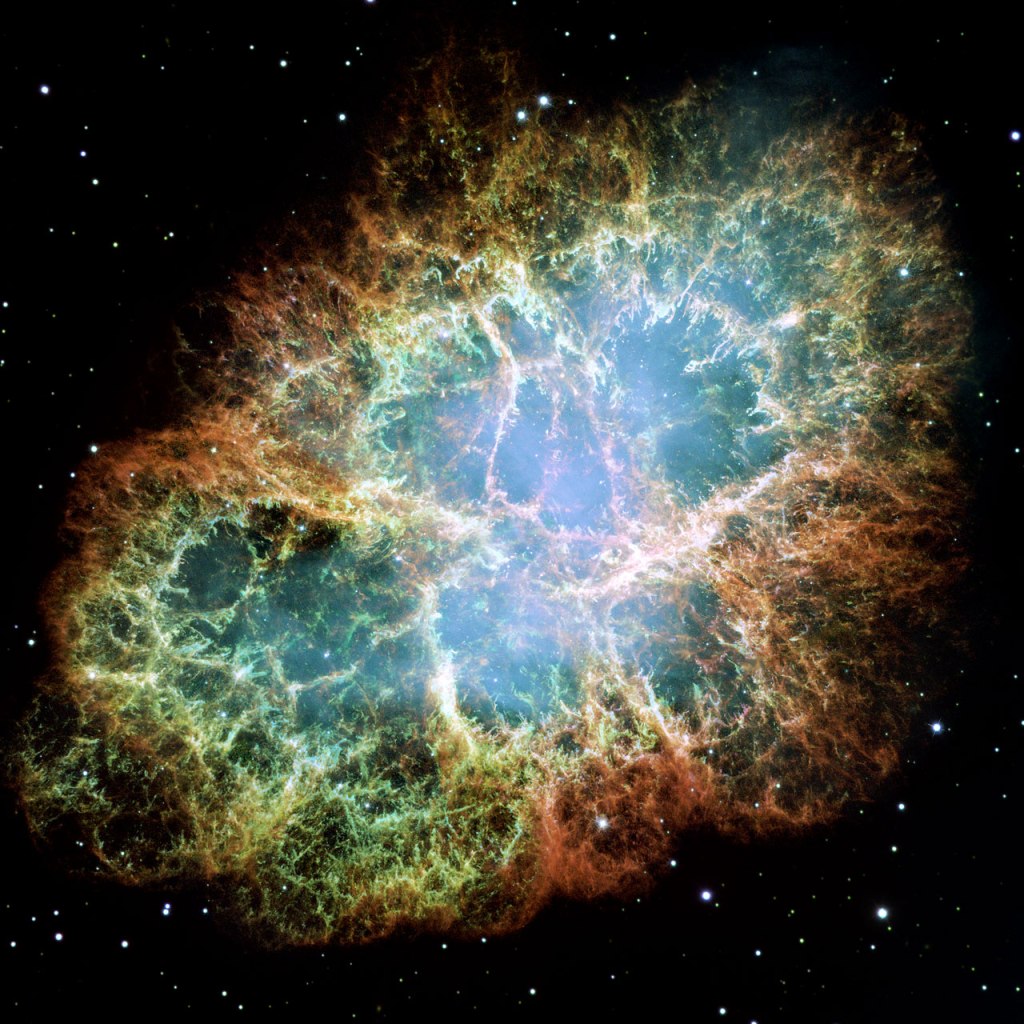
Helium can also be formed from hydrogen in other ways, with German-American theoretical physicist Hans Bethe showing in 1939 that when a star condenses, a small amount of Carbon transforms Hydrogen to Helium. What is important here, is that a chain reaction is generated, resulting in the Carbon-Nitrogen-Oxygen cycle. From there the fabulous dance of electrons over time makes varieties of Oxygen which have different combinations of protons and neutrons, and are called isotopes.
Most of the water in the universe is tied up as ice. In our solar system, one side of Venus is molten, the other ice. The further from the sun we go, the more ice there is on the shady sides of planets. Comets and meteors are partly balls of ice, and transport the frozen water through space – much of the tails of comets is ice. This is thought to explain how we wound up with water on Earth. Hyrdogen and oxygen combining are part of the dance of electrons.
So from a situation where matter is being formed at extreme temperatures and inside a condensing or collapsing star, the exchange of protons, neutrons and electrons results in a cosmic dance of energy exchange. This dance forms all the elements, and the elements again in a quantum energy dance, form the molecules, the building blocks of everything that we think of as matter.
Carbon, nitrogen and oxygen along with hydrogen and phosphorous, are found in the most intimate of spaces: they form DNA. This effectively means we are all walking exemplars of universal processes beginning in the cosmos and found in the body. This view is parallel to the way many Indigenous peoples see humans – as related to, and relations of, the cosmos.
Unfortunately this understanding of our living relationship with the universe has been lost in the West, in a period starting after the Renaissance of the 1500’s with the rise of commercialism and pronouncements by the Catholic Church. In this period the Pope allowed for the exploitation of people and resources in the Papal Bulls Dum Diversas, Romanus Pontifex, and Inter Caetera of 1452, 1455 and 1456 respectively. This was then followed by the Colonisation period of the 1700’s, and while the Papal Bulls have been retracted today, their influence along with Colonisation nonetheless was signficant.
Today we live in a time where it is essential that our relationship to the universe is re-established. This doesn’t mean that people in the West should somehow become Indigenous, but rather that the relationship we are in with the universe is re-established as the central connective basis out of which belief systems are formed. This is essential going forward and what is at stake is the future for coming generations – our collective children who carry our collective DNA, orientated as DNA is, in cosmological energies.
About the author
Pasha Clothier is of Tahitian and Aotearoa New Zealand descent, an eighth generation descendant of tapa makers Vahineatua, Mauatua and Teio of Pitcairn Island, known traditionally on Tahiti as Hitiaurevareva. An artist writer, Pasha has exhibited one hundred and nineteen times in seventeen countries, and has twenty five publication credits. Pasha is a nickname given as a child, and is short for ‘Passionate.’
Notes
1. Ball, P. (2000). H20: A biography of water. London: Phoenix.
The information pertaining to the interplay of cosmic forces leading to water is based on a summary of pages 5 – 16 of Ball’s book. Any incorrect statements are my responsibility.
2. We need to remember at all times that most of the universe is dark energy and dark matter, accounting for 95% of all stuff, with the material component we think of as ‘things’ just 5%.
 WEAVING WATER
Leave a comment